OPINION ARTICLE
Between Inequities and Possibilities: How Intersectionality can Transform Oral Cancer Care in the National Health System
Entre Iniquidades e Possibilidades: Como a Interseccionalidade pode Transformar o Cuidado ao Câncer de Boca no Sistema Único de Saúde
Entre Inequidades y Posibilidades: Cómo la Interseccionalidad puede Transformar la Atención al Cáncer Bucal en el Sistema Único de Salud
https://doi.org/10.32635/2176-9745.RBC.2026v72n3.5603
Alessandro Diogo De-Carli1; Alan Roger Santos-Silva2
1Universidade Federal de Mato Grosso do Sul, Faculdade de Odontologia, Disciplina de Saúde Coletiva. Campo Grande (MS), Brasil. E-mail: alessandro.carli@ufms.br. Orcid iD: https://orcid.org/0000-0002-4560-4524
2Universidade Estadual de Campinas, Faculdade de Odontologia de Piracicaba, Departamento de Diagnóstico Oral. Piracicaba (SP), Brasil. E-mail: alan@unicamp.br. Orcid iD: https://orcid.org/0000-0003-2040-6617
Corresponding author: Alessandro Diogo De-Carli. Universidade Federal de Mato Grosso do Sul, Faculdade de Odontologia, Disciplina de Saúde Coletiva. Rua Canxim, 38 – Residencial Damha III. Campo Grande (MS), Brasil. CEP 79046-214. E-mail: alessandro.carli@ufms.br
INTRODUCTION
Oral cancer is a significant public health problem due to its global burden1, its frequent late-stage diagnosis, and the resulting functional, psychological, and social sequelae that substantially compromise quality of life2. Traditionally, affected individuals are men over 40 years of age with histories of tobacco and alcohol use3. However, in a continental country marked by profound and persistent inequalities such as Brazil4, understanding oral cancer solely through this traditional risk profile is insufficient.
Critically examining the health-disease process requires considering not only biological and behavioral risk factors but also structural conditions that shape who becomes ill, when, and with what consequences. Moving beyond classical epidemiology enables the exploration of deeper and more complex drivers of inequity in oral health5. Intersectionality, as an analytical framework5, provides a powerful lens to understand how overlapping social identities and power structures – such as race, gender, socioeconomic position, disability, migration status, and marital status6 – produce distinct forms of vulnerability and shape access to care.
Although intersectionality remains underexplored in oral cancer research, its relevance is clear. Individuals often face “triple exclusion”: social marginalization, stigmatization within dentistry itself, and persistent fragmentation between oral and general health services7. Intersectionality helps explain the complexity of daily life and human experience by illuminating how interlocking systems of oppression and privilege operate8. For a country historically shaped by colonization, slavery, structural racism, and entrenched socioeconomic disparities, this analytical framework is particularly necessary.
Addressing oral cancer in Brazil requires not only clinical expertise but also the recognition that structural problems maintain and reproduce exclusion. Strengthening oral cancer care within the National Health System (SUS) demands innovative actions, deeper theoretical reflection, and the generation of evidence that reveals how long-standing social markers shape vulnerability. Against this backdrop, this article explores how intersectional practices may enhance access to care within SUS and guide research agendas that remain largely unexplored.
DEVELOPMENT
The Oral Cancer Patient and Oral Healthcare in SUS
Oral cancer care in SUS is grounded in principles of universality, equity, and comprehensiveness. As a national policy, SUS is continuously redefined in response to territorial needs and political forces that do not always promote its consolidation. Within this context, the National Oral Health Policy (PNSB) – first conceptualized in 2003 and formalized in 20239 – represents a major step toward establishing oral health as a state policy rather than a partisan initiative. More recently, the Ministry of Health implemented the Oral Health Care Network (RASB)10, which formally structures primary, secondary, and tertiary levels of oral healthcare.
For oral cancer, these institutional advances clarify the responsibilities of dental professionals across levels of care and reinforce the necessity of integrated and timely attention. Nonetheless, significant barriers remain. The scope of work performed by Oral Health Teams in the Family Health Strategy and by Dental Specialty Centers (CEOs) does not yet consistently guarantee timely and comprehensive care in territories marked by deep inequities. Intersectionality offers a path to reorient practices so that populations historically excluded from preventive actions – such as those with low literacy, low income, ‘racialized’ identities, rural residency, or belonging to LGBTQIA+ communities – gain visibility and access.
Evidence suggests that intersectional vulnerabilities shape access to timely cancer treatment. A recent Brazilian study analyzing oral cancer notifications from 2011 to 2020 identified that Black women aged 40-79 with less than eight years of schooling, widowed, and living in the Southeast region had higher odds of treatment delays beyond 91 days, despite the Brazilian legal mandate requiring initiation within 60 days11. These inequities underscore the need for oral health teams to adopt practices that recognize the multiple social identities, power relations, and contexts influencing the itineraries7 of SUS users with oral cancer pathways.
Integrating intersectionality into clinical routines requires moving beyond theory. It demands identifying how territorial histories, the lived experiences of users, and the positionalities of professionals influence the care process12. Lessons from the United States illustrate this need: intersectional approaches in oral healthcare are increasingly used to address rising oral and oropharyngeal cancer rates among people living with HIV belonging to racial/ethnic minorities, recognizing structural racism as a determinant of oral health inequities13. The Brazilian context, shaped by centuries of enslavement and economic exploitation, mirrors many of these dynamics.
A recent historical analysis highlighted how Brazil’s 350-year legacy of slavery continues to shape tobacco use, delayed diagnosis, metastatic progression, and reduced access to oncologic treatments among Afro-Brazilian populations4. The country’s status as a major global tobacco producer – a crop tied to colonial and slave-labor economies – combined with persistent socioeconomic inequality, situates Brazil among regions with the world’s highest oral cancer incidence and mortality. Addressing oral cancer without acknowledging this history risks perpetuating the very inequities that underpin the high incidence rates.
In this sense, the role of oral health professionals is not simply to deliver technically correct clinical care but to adopt a critical-reflexive posture aligned with SUS’s civilizing mission. The system must actively reach those who are socially invisible, beginning with the recognition of their existence and their right to be welcomed into care.
Lived Experience of Oral Cancer: Intersectional Research Perspectives
Given the complexity of oral cancer, research must adopt theoretical-methodological approaches capable of capturing intersectional realities. Oral cancer affects not only individuals but also their families, caregivers, and healthcare teams. Incorporating intersectionality into research represents a progressive act of resistance by exposing mechanisms that maintain inequities14.
In oral health research, however, intersectionality remains limited. Transformative research agendas are urgently needed to investigate complex mechanisms, coproduce interventions with communities, and support public policies grounded in social justice6. Doing so requires direct engagement with populations traditionally excluded from research – those who are poor, racialized, LGBTQIA+, geographically isolated, or socioeconomically marginalized7.
Intersectional research must examine how structural arrangements of social markers shape lived experiences of cancer. Mixed-methods approaches are particularly promising, integrating qualitative insights on identity, discrimination, and social position with quantitative assessments of service use, diagnostic delays, and outcomes15. Methodological flexibility, co-construction of research questions, and shared interpretation of findings are key elements of this paradigm16.
For SUS professionals and researchers, this requires mapping how care pathways unfold across the Oral Health Care Network and identifying which groups remain systematically excluded. Intersectionality should guide the identification of priority groups, the design of data collection instruments, and the interpretation of disparities. Doing so transforms research from a descriptive process into a tool for changing practice.
Accordingly, Figure 1 presents suggested research questions that may serve as a starting point for exploring intersectionality in the context of care for individuals with oral cancer within the Brazilian National Health System.
An Organized, Intersectionality-Informed Oral Cancer Screening Program for Brazil
Building upon evidence synthesized in the IARC Handbook of Oral Cancer Prevention1 and guided by an intersectionality framework, it is proposed a structured, risk-stratified oral cancer screening program fully integrated into SUS (Figure 1). Traditional high-risk groups – adults over 40 years old, tobacco users, and alcohol consumers – remain essential targets. However, restricting screening to these categories overlooks the broader structural vulnerabilities shaping exposure, access, and diagnostic delays.
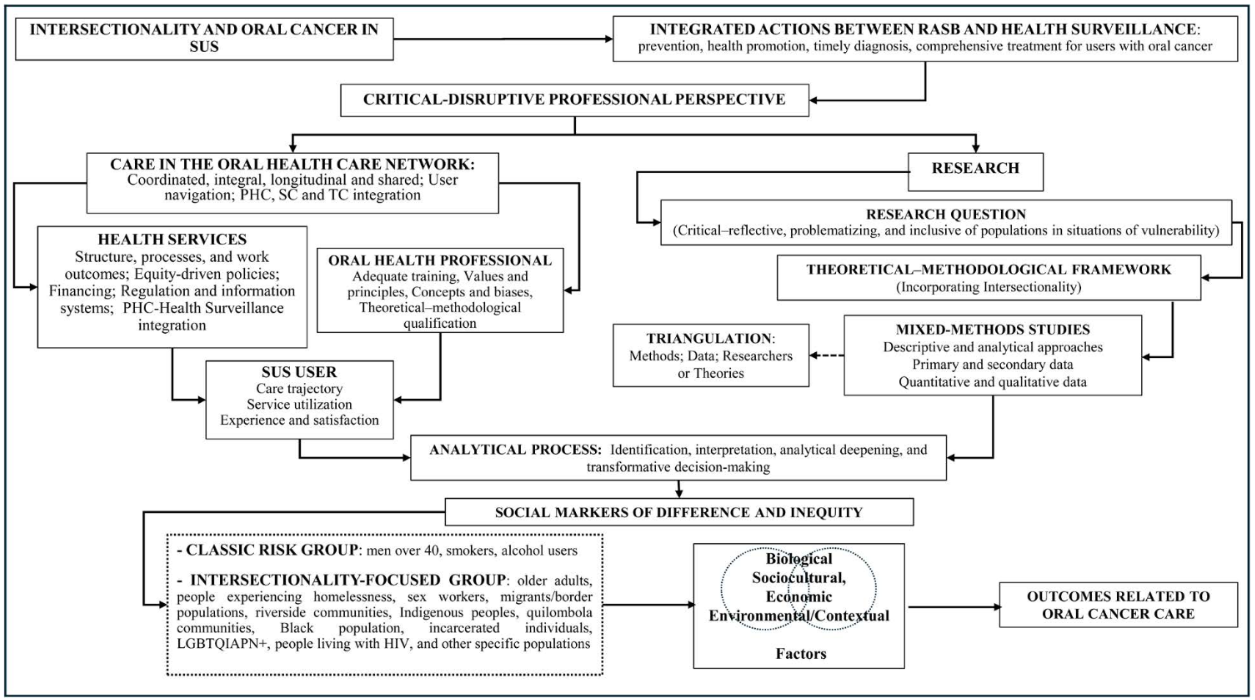
Figure 1. Foundational premises for incorporating intersectionality into the care of oral cancer users within Brazil’s National Health System
Captions: SUS: National Health System; PHC: Primary Health Care; SC: Specialized Care; TC: Tertiary Care; LGBTQIAPN+: lesbians, gays, bisexuals, transgender individuals, queer persons, intersex individuals, asexual persons, pansexual persons, nonbinary individuals, and all other identities and orientations not explicitly included in the acronym HIV: Human Immunodeficiency Virus.
The program expands high-risk criteria to explicitly include afro-Brazilians, individuals with low income or low literacy, people living with HIV, homeless or unstably housed persons, rural and riverside populations, older adults with limited mobility, and migrants or refugees who face institutional discrimination. These populations experience cumulative risk due to racism, social exclusion, and restricted access to healthcare.
The model is anchored in primary care through systematic clinical oral examinations conducted by trained dental surgeons, supported by community health workers who perform standardized risk assessments in homes and community settings. Suspicious lesions are referred through a fast-track pathway to Dental Specialty Centers and stomatology/oral pathology services for biopsy and diagnosis. Tertiary oncology centers ensure timely treatment within the legally mandated 60-day period, supported by patient-navigation services for socially vulnerable individuals.
Cross-cutting components include continuous professional training; standardized protocols for clinical oral examination; telehealth and artificial intelligence tools for triage; integration with tobacco and alcohol cessation programs; and the creation of a national monitoring system modeled after IARC’s CanScreen5 platform to track coverage, diagnostic yield, and inequities over time.
Embedding this model within SUS transforms opportunistic detection into an organized, population-based strategy aimed at equity. By explicitly addressing intersectional vulnerabilities, the program has the potential to reduce diagnostic delays, improve early detection, and mitigate Brazil’s persistent racial, socioeconomic, and regional disparities in oral cancer outcomes.
CONCLUSION
The reflections presented here seek to expand the debate on intersectionality in oral cancer care and research within SUS. Integrating intersectional principles into oral health actions requires professionals to identify the “most vulnerable among the vulnerable”, adopting an expanded and compassionate understanding of users’ lived experiences. This implies not only technical knowledge but also a willingness to confront personal biases and dismantle culturally ingrained assumptions perpetuated through dental education.
In research, comprehensive epistemologies continue to gain ground, especially qualitative and mixed-methods approaches. However, incorporating intersectionality demands a repositioning of the researcher as a social being rather than a neutral observer. Scientific rigor must coexist with the recognition that human diversity and structural inequalities shape health outcomes.
Addressing oral cancer within SUS through an intersectional lens is both scientifically coherent and ethically imperative. As growing literature highlights barriers to diagnosis, treatment, and rehabilitation, decision-making in management, policy, and academia must prioritize those historically marginalized. Doing so strengthens SUS not only as a health system but as a civilizing project committed to equity, justice, and human dignity.
CONTRIBUTIONS
All the authors contributed substantially to the conception and design of the study, acquisition, analysis and interpretation of the data, writing and critical review. They approved the final version for publication.
DECLARATION OF CONFLICT OF INTERESTS
There is no conflict of interests to declare.
DATA AVAILABILITY STATEMENT
All content underlying the text is contained in the manuscript.
FUNDING SOURCES
Alan Roger Santos-Silva is a grantee of the “Fundação de Amparo à Pesquisa do Estado de São Paulo” (FAPESP, grant no. 2024/20694-1).
REFERENCES
1. Bouvard V, Nethan ST, Singh D, et al. IARC Perspective on oral cancer prevention. N Engl J Med. 2022;387(21):1999-2005. doi: https://doi.org/10.1056/nejmsr2210097
2. Mores AL, Bonfim-Alves CG, López RVM, et al. Prognostic factors in head and neck cancer: a retrospective cohort study of 3052 patients in Brazil. Oral Dis. 2025;31(4):1133-9. doi: https://doi.org/10.1111/odi.15196
3. International Agency for Research on Cancer. Oral cancer prevention [Internet]. Lyon: IARC; 2023 [acesso 2026 abr 15]. (IARC Handbooks of Cancer Prevention, v. 19). 1–358 p. Available at: https://publications.iarc.fr/617
4. Figueiredo Lebre Martins BN, Santos ES, Fonseca FP, et al. The impact of colonialism on head and neck cancer in Brazil. Lancet Reg Health Am. 2024;31:100690. doi: https://doi.org/10.1016/j.lana.2024.100690
5. Paula MO. A interseccionalidade enquanto ferramenta analítica aplicada à interpretação da saúde. Saúde Soc. 2024;33(4):e230828pt. doi: https://doi.org/10.1590/S0104-12902024230828pt
6. Tsakos G, Watt RG, Guarnizo-Herreño CC. Reflections on oral health inequalities. Community Dent Oral Epidemiol. 2023;51(1):17-27. doi: https://doi.org/10.1111/cdoe.12830
7. Muirhead VE, Milner A, Freeman R, et al. What is intersectionality and why is it important in oral health research? Community Dent Oral Epidemiol. 2020;48:464-70. doi: https://doi.org/10.1111/cdoe.12573
8. Collins PH, Bilge S. Interseccionalidade. São Paulo: Boitempo; 2021.
9. Presidência da República (BR). Lei nº 14.572, de 08 de maio de 2023. Institui a Política Nacional de Saúde Bucal no âmbito do Sistema Único de Saúde (SUS) e altera a Lei nº 8.080, de 19 de setembro de 1990, para incluir a saúde bucal no campo de atuação do SUS. Diário Oficial da União [Internet], Brasília, DF. 2023 maio 9 [acesso 2026 abr 15]; Edição 87; Seção 1:1. Disponível em: https://www.planalto.gov.br/ccivil_03/_ato2023-2026/2023/lei/l14572.htm
10. Ministério da Saúde (BR). Portaria GM/MS nº 6.213, de 19 de dezembro de 2024. Altera a Portaria de Consolidação GM/MS nº 3, de 28 de setembro de 2017, para instituir a Rede de Atenção à Saúde Bucal - RASB na Política Nacional de Saúde Bucal - PNSB, no âmbito do Sistema Único de Saúde - SUS. Diário Oficial da União [Internet], Brasília, DF. 2024 dez 20 [acesso 2026 abr 15]; Edição 245 Seção 1:156. Disponível em: https://www.in.gov.br/en/web/dou/-/portaria-gm/ms-n-6.213-de-19-de-dezembro-de-2024-603307951
11. Alencar JVA, Carvalho DPC, Umeno HG, et al. Intersectional analysis of the social vulnerability of individuals with differences in the time between oral cancer diagnosis and treatment: a cross-sectional study, Brazil, 2011-2020. Epidemiol Serv Saúde. 2025;34:e20240849. doi: https://doi.org/10.1590/S2237-96222025v34e20240849.pt
12. Barbosa AC, Oliveira SS, Oliveira RG. Vulnerabilidades mediando o encontro do Cuidado em Saúde. Ciênc saúde coletiva. 2024;29(7):e04352024. doi: https://doi.org/10.1590/1413-81232024297.04352024
13. Hernandez AL, Lingas EO, Juarez W, et al. Using an anti-racist research framework to design studies of oral human papillomavirus and oropharyngeal cancer in San Francisco: rationale and protocol for the Health Equity and Oral Health in People living with HIV (HEOHP) qualitative study. BMJ Open. 2024;14(9):e091474. doi: https://doi.org/10.1136/bmjopen-2024-091474
14. Breilh J. Epidemiologia crítica: ciência emancipadora e interculturalidade. Rio de Janeiro: Fiocruz; 2008.
15. Oliveira E, Couto MT, Separavich MAA, et al. Contribuição da interseccionalidade na compreensão da saúde-doença-cuidado de homens jovens em contextos de pobreza urbana. Interface. 2025;24:e180736. doi: https://doi.org/10.1590/Interface.180736
16. Hankivsky O, Cormier R. Intersectionality and public policy. Polit Res Q. 2011;64(1):217-29. doi: https://doi.org/10.1177/1065912910376385
Recebido em 27/11/2025
Aprovado em 15/12/2025
Associate editor: Caroline Madalena Ribeiro. Orcid iD: https://orcid.org/0000-0003-2690-5791
Scientific-editor: Anke Bergmann. Orcid iD: https://orcid.org/0000-0002-1972-8777

Este é um artigo publicado em acesso aberto (Open Access) sob a licença Creative Commons Attribution, que permite uso, distribuição e reprodução em qualquer meio, sem restrições, desde que o trabalho original seja corretamente citado.